
CGG #123: Mastering 也 (Part 1)
💎 Chinese Grammar Gems #123
After eight months in Beijing, I finally tried 北京烤鸭 (Běijīng kǎoyā, Peking duck) this week, which probably says something about how I’ve been spending my time here... It was genuinely good, especially the first few slices rolled up in the pancakes with the sauce, and I say that as someone who loves duck in pretty much any form. But it gets very heavy as the meal goes on, and by the end I was honestly a bit écœurant (queasy), which I didn’t expect going in, and felt like I wouldn’t need to eat again for approximately three days.
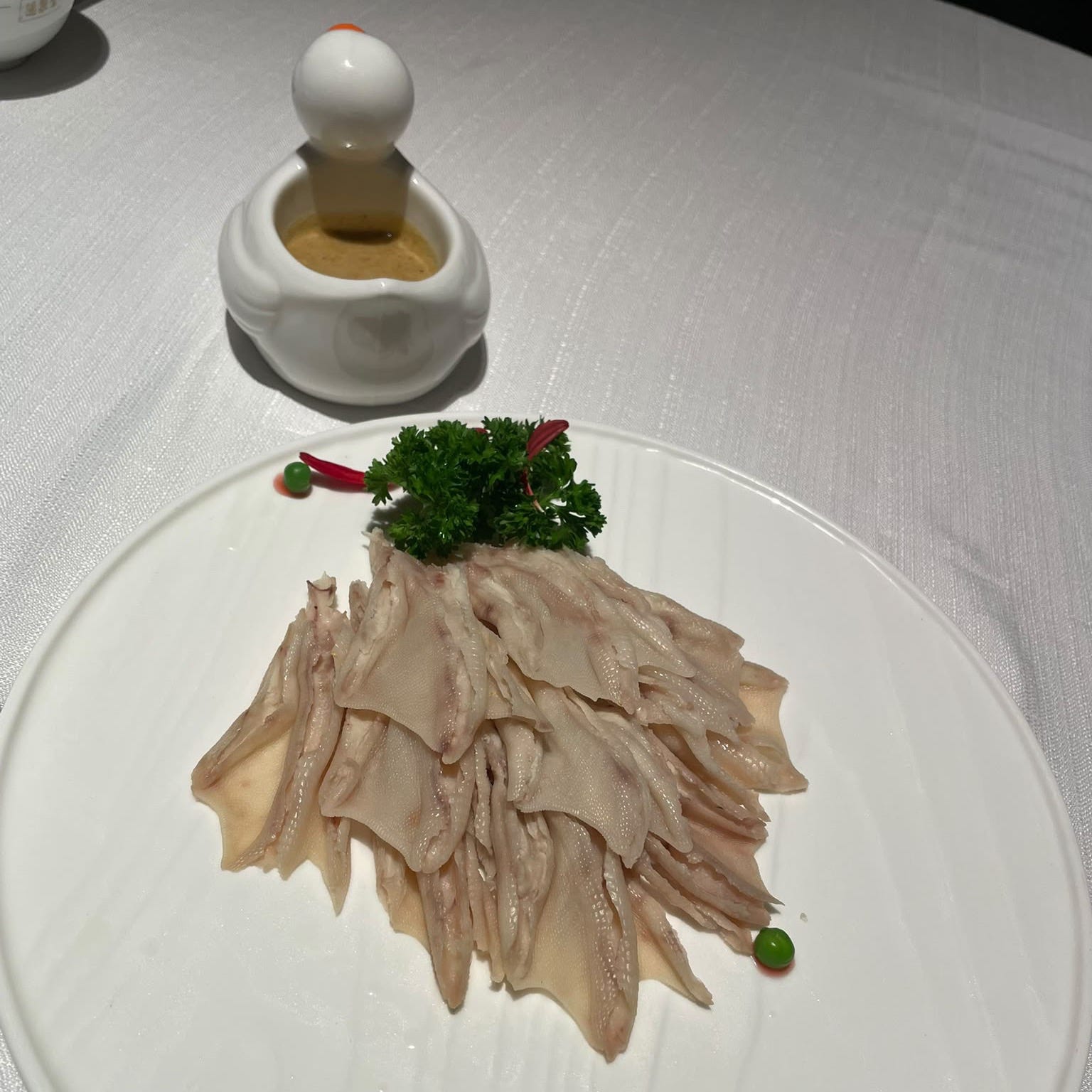
We also ordered 芥末鸭掌 (jièmò yāzhǎng, mustard duck feet), which I’ll let the photo below speak for. “Weird” is probably the most accurate word, though not entirely unpleasant.
With only a few weeks left before I leave Beijing for good, I’ve been trying to actually do the things I kept putting off, and the 北京烤鸭 was overdue. Some of it lives up to the wait, some of it is just duck feet with mustard, but I’d rather leave with the full picture than wonder what I missed.
Today’s lesson is the first of two on 也 (yě), a character that looks deceptively simple but turns out to have quite a few different roles in Mandarin. We’re starting with the two most fundamental ones today.
💎 This Week’s Gem: Mastering 也 (Part 1) 💎
也 (yě) is one of the first words you meet in Mandarin, and you probably learned it as “also.” That is correct, but “also” is only one of the jobs this small word does.
The idea underneath all of them is the same: 也 says that something applies again. Today we look at the two everyday jobs, adding (“too,” “also,” “either”) and emphasis (“even,” “not even,” “not at all”). Next week we handle the heavier work, where 也 means something closer to “still” and where it quietly softens how you sound.
📍 Where 也 Goes
Before the meanings, there is one placement rule, and it covers every use in this lesson. 也 goes before the verb, adjective, or whole predicate. When 很 (hěn), 不 (bù), or 都 (dōu) are in the sentence, 也 comes before them as well.
This trips up a lot of people, because English usually puts “too” at the end of a clause. In Mandarin, 也 never goes at the end. You say 我也去 (wǒ yě qù, “I’m going too”), 我也很忙 (wǒ yě hěn máng, “I’m busy too”), and 我也不想去 (wǒ yě bù xiǎng qù, “I don’t want to go either”), with 也 sitting in front of the rest of the predicate. Word order like this is exactly the kind of thing we sorted out in CGG #100 and #101.
Example
我也很喜欢这家店。
我 / 也 / 很 / 喜欢 / 这 / 家 / 店 / 。
wǒ yě hěn xǐhuan zhè jiā diàn
I really like this shop too.
I / (also) / very / like / this / (measure word for shops) / shop
也 comes before 很喜欢 (hěn xǐhuan), not after the verb.
➕ Job 1: Adding (“too,” “also,” “either”)
This is the neutral 也, the one you will use most. You take something already said and show that it applies to one more person, one more action, or one more situation.
👥 “Also” with a New Subject
In the most common case, one subject has done something, and now a second subject joins the same action or state. English often translates this with “too” or “also,” but Mandarin is simply adding a second participant to an idea already on the table.
📚 Structure: [Subject A] + [Predicate],[Subject B] + 也 + [same Predicate]
Example
他去,我也去。
他 / 去 / ,/ 我 / 也 / 去 / 。
tā qù, wǒ yě qù
He’s going, and I’m going too.
he / go / I / (also) / go
也 works the same way before 是 (shì), 有 (yǒu), and adjectives, not only before action verbs. So 我也是学生 (wǒ yě shì xuésheng, “I’m a student too”), 我也有时间 (wǒ yě yǒu shíjiān, “I have time too”), and 我也很高兴 (wǒ yě hěn gāoxìng, “I’m glad too”) all use the exact same placement. 也 attaches to the whole predicate, whatever kind it is.
Example
小王是学生,小李也是学生。
小王 / 是 / 学生 / ,/ 小李 / 也 / 是 / 学生 / 。
Xiǎo Wáng shì xuésheng, Xiǎo Lǐ yě shì xuésheng
Xiao Wang is a student, and Xiao Li is a student too.
Xiao Wang / is / student / Xiao Li / (also) / is / student
也 sits before 是, the same place it would sit before any other verb.
🔄 “Also” with the Same Subject
When the subject stays the same and you want to add a second action or quality, 也 still does the work. Here it introduces another predicate that belongs to the same person, so the feeling is “and also” rather than “someone else too.” You do not repeat the subject. If the first clause uses a modal verb like 会 (huì) or 喜欢 (xǐhuan), that verb comes back right after 也, since 也 needs a predicate to attach to and cannot stand alone before the new verb phrase.
📚 Structure: [Subject] + [Predicate A],也 + [Predicate B]
Example
我会说中文,也会说法语。
我 / 会 / 说 / 中文 / ,/ 也 / 会 / 说 / 法语 / 。
wǒ huì shuō zhōngwén, yě huì shuō fǎyǔ
I can speak Chinese, and I can speak French too.
I / can / speak / Chinese / (also) / can / speak / French
会 (huì) repeats after 也 to keep both halves balanced.
Example
这个手机很便宜,也很好看。
这个 / 手机 / 很 / 便宜 / ,/ 也 / 很 / 好看 / 。
zhège shǒujī hěn piányi, yě hěn hǎokàn
This phone is cheap, and it looks good too.
this / phone / very / cheap / (also) / very / good to look at
You will also meet 也 as the required partner in 除了…以外…也 (chúle…yǐwài…yě), “besides X, Y too.” The 也 in the second clause is what tells you the sentence is adding something rather than making an exception.
Example
除了周末,他平时也去健身房。
除了 / 周末 / ,/ 他 / 平时 / 也 / 去 / 健身房 / 。
chúle zhōumò, tā píngshí yě qù jiànshēnfáng
Besides weekends, he goes to the gym on weekdays too.
besides / weekend / he / usually / (also) / go / gym
以外 (yǐwài) is often dropped in speech, as it is here, but 也 stays.
⚖️ “Not … Either”
The same adding job happens in the negative. English switches to “either” here, but Mandarin keeps 也. The one thing to watch is the order: 也 comes before the negation, never after it. Use 不 (bù) for present, future, or habitual situations, and 没 (méi) for things that did not happen.
📚 Structure: [Clause with 不 / 没],[Subject B] + 也 + 不 / 没 + [Predicate]
Example
我不去,他也不去。
我 / 不 / 去 / ,/ 他 / 也 / 不 / 去 / 。
wǒ bù qù, tā yě bù qù
I’m not going, and he isn’t going either.
I / not / go / he / (also) / not / go
Example
昨天他没吃早饭,我也没吃。
昨天 / 他 / 没 / 吃 / 早饭 / ,/ 我 / 也 / 没 / 吃 / 。
zuótiān tā méi chī zǎofàn, wǒ yě méi chī
He didn’t eat breakfast yesterday, and I didn’t either.
yesterday / he / not have / eat / breakfast / I / (also) / not have / eat
A common mistake is to flip the order and produce something like 他不也去. That sounds wrong to native speakers. The order is always 也 before 不 or 没, so 他也不去 (tā yě bù qù), not the other way around.
🔍 Need to review a pattern?
Head to chinesegrammargems.com. Every lesson we’ve covered is searchable, organized by topic, and available as a printable PDF.
💥 Job 2: Emphasis (“even,” “not even,” “not at all”)
也 does not always stay neutral. With the right partners it pushes a sentence to an extreme. This is the point where you might start wondering whether 也 still means “also” or has turned into something stronger, and that is the right thing to wonder. The thread to hold onto: 也 is still saying “this case is included too,” only now the included case is a surprising or extreme one.
🔗 Building Up with 不但…也
This pattern is the bridge between plain adding and real emphasis. The first clause uses 不但 (bùdàn) to signal that a second, stronger point is coming, and 也 delivers it. When we went through the different ways to say “and” in CGG #109and #110, both 不但…而且 (bùdàn…érqiě) and 既…也 (jì…yě) came up, and 不但…也 is the same building idea with 也 holding the second half.
📚 Structure: [Subject] + 不但 + [Point A],也 + [Point B]
Example
这家店不但便宜,也很方便。
这家 / 店 / 不但 / 便宜 / ,/ 也 / 很 / 方便 / 。
zhè jiā diàn bùdàn piányi, yě hěn fāngbiàn
This shop is cheap, and it’s very convenient too.
this / shop / not only / cheap / (also) / very / convenient
🚫 “Not at All” and “Not Even One”
Once 也 teams up with a tiny quantity and a negation, it pushes the sentence all the way to zero. There are two flavors, and they share one logic.
The first denies a degree. 一点 (yìdiǎn) means “a little,” but inside 一点也不 (yìdiǎn yě bù) or 一点也没 (yìdiǎn yě méi) it stands for the smallest amount you can imagine, and the sentence denies even that. The result is “not at all.”
📚 Structure: [Subject] + 一点 + 也 + 不 / 没 + [Predicate]
Example
这个工作我一点也不喜欢。
这个 / 工作 / 我 / 一点 / 也 / 不 / 喜欢 / 。
zhège gōngzuò wǒ yìdiǎn yě bù xǐhuan
I don’t like this job at all.
this / job / I / a bit / (emphatic) / not / like
The second flavor denies a count. You take 一 (yī) plus a measure word, the smallest possible quantity, and say not even that much happened. This is the “not even one” pattern from the measure words lessons in CGG #104 and #105, where 一 plus a measure word is followed by 也 or 都 and a negation.
📚 Structure: 一 + [Measure Word] + [Noun] + 也 / 都 + 不 / 没 + [Verb]
Example
他一句话也没说就走了。
他 / 一 / 句 / 话 / 也 / 没 / 说 / 就 / 走 / 了 / 。
tā yí jù huà yě méi shuō jiù zǒu le
He left without saying a single word.
he / one / (measure word for utterances) / speech / (even) / not have / say / then / leave / (completed action 了)
This says more than “he didn’t speak.” It says “not even one word,” and 也 or 都 both work here.
❓ “Nobody,” “Nothing,” “Nowhere” with Question Words
Question words can stop being questions, a trick we took apart in CGG #49. When 谁 (shéi), 什么 (shénme), or 哪儿 (nǎr) sit in front of 也 and a negation, they mean “anyone,” “anything,” or “anywhere,” and the negation turns the whole phrase into “nobody,” “nothing,” or “nowhere.”
📚 Structure: [Question Word] + 也 + 不 / 没 + [Predicate]
Example
谁也不知道答案。
谁 / 也 / 不 / 知道 / 答案 / 。
shéi yě bù zhīdào dá’àn
Nobody knows the answer.
who (anyone) / (even) / not / know / answer
Example
我太累了,什么也不想做。
我 / 太 / 累 / 了 / ,/ 什么 / 也 / 不 / 想 / 做 / 。
wǒ tài lèi le, shénme yě bù xiǎng zuò
I’m so tired I don’t want to do anything.
I / too / tired / (了) / what (anything) / (even) / not / want / do
So 谁也不知道 (shéi yě bù zhīdào) means “nobody knows,” not “who also doesn’t know.” 谁 has become “anyone.”
There is a contrast worth holding onto for next week. In positive sentences, this kind of sweeping statement usually takes 都 (dōu), the “all” word we went through in CGG #57 and #58, as in 谁都知道 (shéi dōu zhīdào), “everyone knows.” The negative version is the one that commonly takes 也. We will compare 也 and 都 properly next week.
🌟 A Clear “Even” with 连…也
On its own, 也 can hint at “even,” but only when the context makes the added item surprising, which leaves bare 也 ambiguous. 这个字我也认识 (zhège zì wǒ yě rènshi) can mean “I know this character too” or “I even know this character,” and only the situation tells you which.
For an “even” that cannot be misread, use 连…也. 连 (lián) marks the surprising item, and 也 confirms that even that item is included. We first connected things with 连 in CGG #28, where it pairs with either 都 or 也.
📚 Structure: [Subject] + 连 + [Surprising Item] + 也 + [Predicate]
Example
他连谢谢也没说。
他 / 连 / 谢谢 / 也 / 没 / 说 / 。
tā lián xièxie yě méi shuō
He didn’t even say thank you.
he / even / thank you / (even) / not have / say
Example
连小孩子也懂这个道理。
连 / 小孩子 / 也 / 懂 / 这个 / 道理 / 。
lián xiǎoháizi yě dǒng zhège dàolǐ
Even a child understands this.
even / child / (even) / understand / this / principle
连…都 is a little more common than 连…也, but both are natural and mean the same thing.
When you want an “even” that is more explicit, often in writing, there is 甚至 (shènzhì), which we met among the connectors for pushing a sentence to a stronger point in CGG #39 and #40. Instead of quietly adding a parallel case, 甚至 announces that you are stepping up to a stronger point: 这本书很难,他甚至第一页也没看懂 (zhè běn shū hěn nán, tā shènzhì dì yī yè yě méi kàndǒng), “this book is so hard that he couldn’t even understand the first page.”
Curious about your Mandarin mastery?
How many words, characters, or chengyu can you recognize?
📝 Recap
Placement of 也 (yě): It always goes before the verb, adjective, or whole predicate, and in front of 很 (hěn), 不 (bù), and 都 (dōu) too. Unlike English “too,” it never sits at the end of a clause.
Job 1, Adding (“too,” “also,” “either”): The neutral 也. You take something already said and show it applies to one more person, action, or situation.
New subject: A second subject joins an idea already on the table. 也 attaches to the same predicate, working before 是 (shì), 有 (yǒu), and adjectives, not just action verbs.
Same subject: You add a second action or quality, dropping the repeated subject. A modal like 会 (huì) or a verb like 喜欢 (xǐhuan) comes back after 也, since 也 can’t stand alone.
除了…以外…也 (chúle…yǐwài…yě): A “besides X, Y too” frame where 也 marks the addition. 以外 is often dropped in speech, but 也 stays.
“Not … either”: The same job in the negative. Keep the order 也 before the negation (不 for present/habitual, 没 (méi) for things that didn’t happen), so 他也不去 (tā yě bù qù), never the reverse.
Job 2, Emphasis (“even,” “not even,” “not at all”): 也 still says “this case is included too,” only now the included case is a surprising or extreme one.
不但…也 (bùdàn…yě): The bridge from adding to emphasis. 不但 flags a second, stronger point, and 也 delivers it.
一点也不 / 没 (yìdiǎn yě bù / méi): Denies even the slightest degree, giving “not at all.”
一 + measure word + 也 / 都 + 不 / 没: Denies a count rather than a degree, giving “not even one.” Both 也 and 都 (dōu) work here.
Question word + 也 + 不 / 没: 谁 (shéi), 什么 (shénme), and 哪儿 (nǎr) become “anyone,” “anything,” “anywhere,” and the negation turns the phrase into “nobody,” “nothing,” “nowhere.” The positive sweeping version usually takes 都 instead.
连…也 (lián…yě): An unmistakable “even.” 连 marks the surprising item and 也 confirms it’s included. 连…都 is slightly more common but means the same; for a more explicit, written “even,” use 甚至 (shènzhì).
⛏️ Practice Makes Perfect
Now it’s time to put 也 (yě) to work! This little word looks easy, but the real skill is choosing the right job for the moment: are you simply adding something (“too,” “also,” “either”), or are you emphasizing a surprising case (“even,” “not even,” “not at all”)? As you translate, keep two habits in mind. First, 也 always sits in front of the verb, adjective, or predicate, and in front of 不, 很, and 都 too, so it can never hang at the end of a clause the way English “too” does. Second, pay attention to the negation: 不 for habits and the present, 没 for things that didn’t happen.
🌱 Easy
I want to eat some fruit, and I also want to drink some water.
It’s raining today, I don’t want to go anywhere.
I was so busy today I didn’t eat a single bite.
This phone is not only cheap, it also looks nice.
🌳 Advanced
Besides hiking, I’ve recently gotten into rock climbing too.
We spent the whole afternoon in meetings and still hadn’t made the slightest progress.
The Taklamakan Desert is so dry that even the toughest plants struggle to survive.
This investment looks tempting, but I don’t understand the market, and I don’t trust that company either.
🌟 Practice More with Pearls of Mandarin 🌟
When I was learning Mandarin, practicing regularly was the key that unlocked fluency for me. I’d love for you to have that same experience. That’s why I created the Pearls of Mandarin Worksheets.
Here’s how each resource in the subscription supports your journey:
PM Translation (Saturdays) – Each Saturday, you’ll get two sets of translation exercises from English to Mandarin:
🌱 Easy (HSK 2-3-4) – Great for mastering foundational grammar.
🌳 Advanced (HSK 4-5-6) – Perfect if you’re looking for deeper fluency and subtle nuances.
Each worksheet comes with detailed corrections and clear grammar explanations, helping you craft natural and authentic sentences. With practice, you’ll confidently translate grammar knowledge into real-life Mandarin skills.
PM Comprehension (Sundays) – Each Sunday, you’ll receive two comprehension texts with audio at both natural and slow speeds, full pinyin, and translations:
🌱 Easy (HSK 2-3-4) – Ideal for developing solid listening and comprehension skills.
🌳 Advanced (HSK 4-5-6) – Great if you’re ready to challenge yourself further.
These texts include vocabulary lists, HSK-style comprehension questions, and grammar notes, designed to boost your listening abilities and vocabulary in context.
Complete Access to the CGG Archive – With a paid subscription, you’ll unlock full access to the entire CGG library, including over 120 grammar lessons. Free subscribers only see the latest lesson, but this archive lets you revisit essential grammar anytime. Plus, you’ll get access to chinesegrammargems.com to quickly find exactly what you need and review easily past lessons. This includes a 400+ pages PDF recap file.
If you think this could help in your journey as it helped in mine, subscribe to receive these resources in your inbox every weekend.
I’m here to share what I’ve learned and to support you as you make your way towards mastery.
That’s a wrap for today!
This weekend, look out for your PM Translation and PM Comprehension worksheets. They’ll give you the chance to apply what you’ve learned and keep improving your Mandarin skills.
Happy learning,
Pierre 🐼